
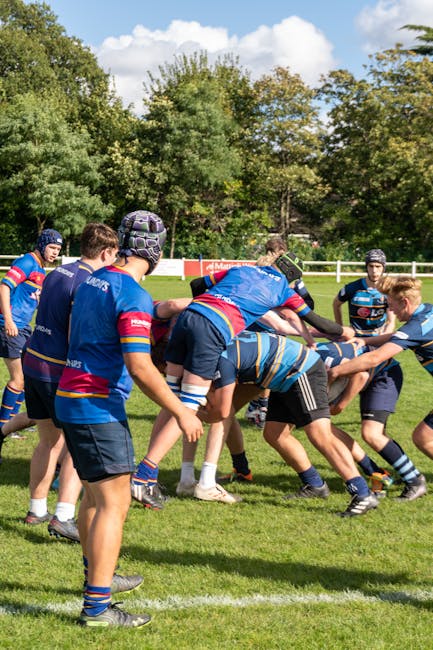
To excel on the rugby field, speed is an indispensable attribute. It can make the difference between scoring a try or being stopped in your tracks. Speed not only enhances our ability to cover distances quickly but also improves our agility and reaction times during critical moments. Investing time in speed training will yield substantial benefits, allowing us to outmaneuver opponents and create scoring opportunities.
Article Summary
Improving speed for rugby players hinges on a combination of physical training, technique refinement, and strategic practice. By integrating sprint drills, strength training, and agility exercises, we can enhance our overall quickness and responsiveness on the field.
Understanding Speed in Rugby
Speed in rugby is multifaceted; it isn’t merely about raw sprinting power. This attribute manifests in several forms, including acceleration, top-end speed, and agility. Each of these components plays a critical role in our performance.
Acceleration
Acceleration is the rate at which we reach our top speed. In rugby, this can be particularly significant during short bursts of movement, such as breaking through a tackle or chasing a ball. It is essential to focus on explosive starts and quick foot movements, as these are vital for gaining an edge.
Top-End Speed
Top-end speed refers to the maximum velocity we can sustain. Rugby players usually don’t need to maintain this speed for long distances; however, having a higher top-end speed can provide an advantage when sprinting down the field.
Agility
Agility combines speed with the ability to change direction quickly and efficiently. In rugby, players often find themselves pivoting or sidestepping, whether to dodge a defender or to reposition for a pass.
Key Elements to Enhance Speed
In order to improve our speed, we should consider a variety of key training elements. These elements form the backbone of an effective speed development program tailored specifically for rugby players.
Sprint Drills
Sprint drills should be our first focus. High-intensity interval training (HIIT) can improve both acceleration and top speed.
Here are a few effective sprint drills to incorporate:
Each drill can be done in short bursts of 10 to 30 meters, with rest intervals to allow for recovery. Consistency is key, so incorporating sprint drills into our weekly routine will yield visible improvements over time.
Strength Training
While speed training is vital, we must not overlook the importance of strength training when attempting to improve our speed. Stronger muscles generate more power, which translates into increased speed.
Key exercises include:
As we increase our strength, we should track our progress. Progress monitoring allows us to see improvements, providing motivation to push ourselves further.
Agility Training
Agility is critical in rugby and should be incorporated into our training regimen. Quick footwork drills and cone drills can enhance our ability to change directions rapidly, enabling us to navigate the field more effectively during play.
Here are some specified drills:
Incorporating these drills into our workouts multiple times per week can substantially improve our on-field performance.
Nutrition and Recovery
While training is pivotal, we must also consider nutrition and recovery as crucial determinants of our speed. Our bodies require the right fuel to perform optimally, especially when engaging in strenuous speed-training sessions.
A balanced diet rich in carbohydrates, protein, and healthy fats will aid in recovery and performance. Consuming protein post-workout facilitates muscle repair, while carbohydrates replenish lost energy.
Moreover, adequate rest is non-negotiable. Muscles need time to recover and adapt after intense workouts. Staying well-hydrated and prioritizing sleep will ensure we are ready for each training session.
Conclusion
In conclusion, improving speed for rugby players involves a comprehensive approach that combines sprint drills, strength training, agility work, nutrition, and recovery practices. By embracing this structured methodology, we can enhance our on-field performance, gaining the much-needed edge in competitive scenarios. Let’s commit to this journey together, as we transform our speed and agility, one training session at a time.